





Written By: Lindsay Kuula
Date: December 3rd, 2025
Table of Contents:
When Does Sleep Support Make Sense
What I Didn’t Know About Melatonin
Shocking Data And Info About Melatonin
An Alternative To Melatonin
Side By Side Comparison
Zarbees Gentle Bedtime Gummies
Olly Kids Sleep
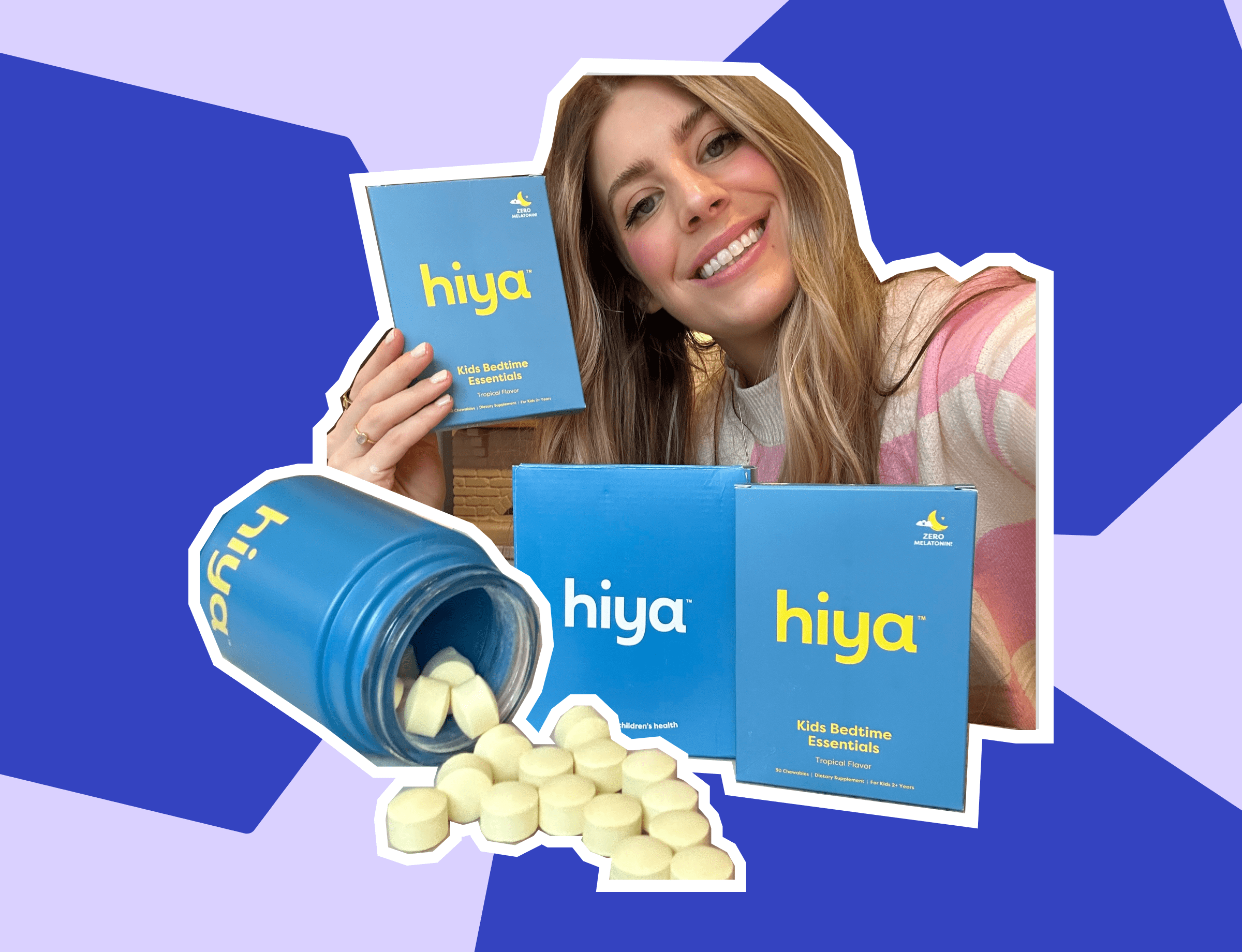
Hiya Bedtime Essentials
The Dangers Of Added Sugar
Pricing
My Pick
Summary
I have friends whose 2-6 year-olds are absolutely bouncing off the walls at bedtime.
Not in a “bad parenting” way. These are good parents with solid routines. Their kids just can’t seem to wind down.
And when I ask what they’re doing to help support sleep, it’s almost always melatonin gummies.
Which made me wonder: how safe are these products actually? What are we actually giving kids to help them sleep? What should we be looking for? And what’s the deal with melatonin?
E isn’t quite two yet, so he’s not old enough for most sleep supplements (most brands set the minimum age at 3-4). But I wanted to give my friends strong, evidence-backed advice, so I dug into the research.
Here’s what I learned. And honestly, some of it really surprised me.
When Does Sleep Support Even Make Sense?
First, I want to be clear: not every kid needs sleep supplements.
Some kids fall asleep easily, sleep soundly, wake up refreshed. If that’s your kid, you can stop reading now and go enjoy your magical unicorn child.
But for a lot of (if not most) families, bedtime is chaos.
The 7pm bouncing-off-walls energy when they should be winding down. The 45-minute battles to actually get them to stay in bed (one more “I need a hug” or “I just need another sip of water”).
The tossing, turning and can we say moaning you can hear through the monitor. The overtired meltdowns that make bedtime take two hours.
And here’s what I’ve realized: it’s not always about “bad habits” or too much screen time (though those definitely matter).
It’s that kids today are navigating a level of stimulation that previous generations just weren’t.
Think about it:
Constant screen exposure. Even with strict limits, most kids are still getting more than we ever did.
Processed foods and added dyes. Blood sugar spikes and crashes all day long.
Packed schedules. School, activities, homework with barely any downtime.
Less outdoor play. Which directly affects natural melatonin production from sunlight.
Environmental stressors. They pick up on our stress, world events, social dynamics even at young ages.
The result? A lot of kids have trouble winding down both their bodies AND their minds.
Not because something’s “wrong” with them, but because their nervous systems are working overtime in a world that’s constantly asking them to be “on.”
And that’s where sleep support can actually help. Not as a bandaid for irregular routines, but as a tool to help their bodies do what they’re designed to do in an environment that’s working against them.
The Melatonin Thing I Didn’t Know
Okay, so here’s where I started getting really concerned.
When I asked my mom friends what they use for sleep, probably 80-90% said melatonin gummies.
And I totally get it. Melatonin is marketed as a “natural sleep aid,” it’s over-the-counter, it’s everywhere. It seems harmless.
But then I started digging into the research and… wow.
The Numbers That Stopped Me in My Tracks
I found a CDC study on pediatric melatonin ingestions and the numbers are staggering:
Poison control calls for kids accidentally taking melatonin increased 530% from 2012 to 2021.
In 2021 alone, melatonin accounted for nearly 5% of ALL pediatric poisonings. That’s compared to just 0.6% in 2012.
Over 260,000 cases in a single decade. More than 4,000 hospitalizations.
Most of these were accidental ingestions! Kids under 5 mistaking gummies for candy.
But the sheer volume of cases? That tells you how widespread melatonin use has become in homes with young kids.
But Here’s the Part That Really Got Me
Melatonin isn’t a vitamin. It’s a hormone.
Our kids’ natural melatonin levels drop by 75% from early childhood to young adulthood.
Researchers have found that this decline is likely linked to puberty timing and sexual maturation.
When you give synthetic melatonin, you’re not actually supporting the body’s natural production. You’re giving them the hormone directly.
And here’s what keeps me up at night: we don’t have long-term studies on what that means for developing kids.
Animal studies show that exogenous melatonin (the synthetic melatonin used in some supplements) can suppress reproductive hormone secretion. But in humans? We just don’t know yet.
Is that definitely happening in kids taking melatonin gummies? Unknown.
But for me, “we don’t know” with my kid’s hormones is enough to look for other options.
Anything that has a possible endocrine disruption warning, I run the other direction and find products and companies that ACTUALLY give a S#!$ about our kids.
The Dosing Problem
And then there’s the regulation issue.
Melatonin supplements don’t require FDA approval because they’re classified as dietary supplements. Studies found the actual melatonin content can vary from negative 83% to positive 478% of what the label claims.
Some supplements even contained undisclosed (hidden) serotonin – a prescription medication.
So you might think you’re giving 1mg, but it could be 5mg or nothing at all.
The American Academy of Sleep Medicine has released guidance rethinking melatonin use in kids, which really underscores how much we’re still learning about this.
What I Started Looking For Instead
Once I realized melatonin wasn’t the answer for my family, I wanted to understand what COULD help. Specifically, what supports the body’s natural processes instead of doing the work for it? Here’s what actually made sense to me:
Magnesium. This does way more than just relax muscles. It actually supports your body’s natural melatonin production (rather than giving synthetic hormones). It also helps with GABA receptor function, which is your body’s natural “calm down” signal. Studies show magnesium can be linked to sleep problems, and supplementation can improve sleep quality.
L-Theanine. This is an amino acid that reduces stress and promotes calm without causing drowsiness. It doesn’t knock you out. It just takes the edge off so the transition to sleep is easier. Research shows it can reduce stress and improve sleep quality.
GABA (Gamma-Aminobutyric Acid). Your brain’s primary “slow down” neurotransmitter. It reduces neural excitability naturally, which is huge for kids whose brains won’t stop racing at bedtime.
Vitamin B6. A critical cofactor in natural melatonin production. It helps convert tryptophan into serotonin, which then converts to melatonin. Instead of giving the end product, you’re supporting the whole pathway.
Chamomile. The gentle, traditional support for relaxation. Thousands of years of use, modern research backing it up, and its non-habit forming.
Zero sugar. This one might seem obvious, but you’d be surprised how many kids’bedtimesupplements have sugar. Sugar before bed can contribute to insulin spikes, which can trigger a cortisol response that’s literally the opposite of what you want for sleep.
The key difference: all of these support your child’s body in doing what it’s designed to do, rather than doing the work for it with synthetic hormones.
What’s Actually Out There
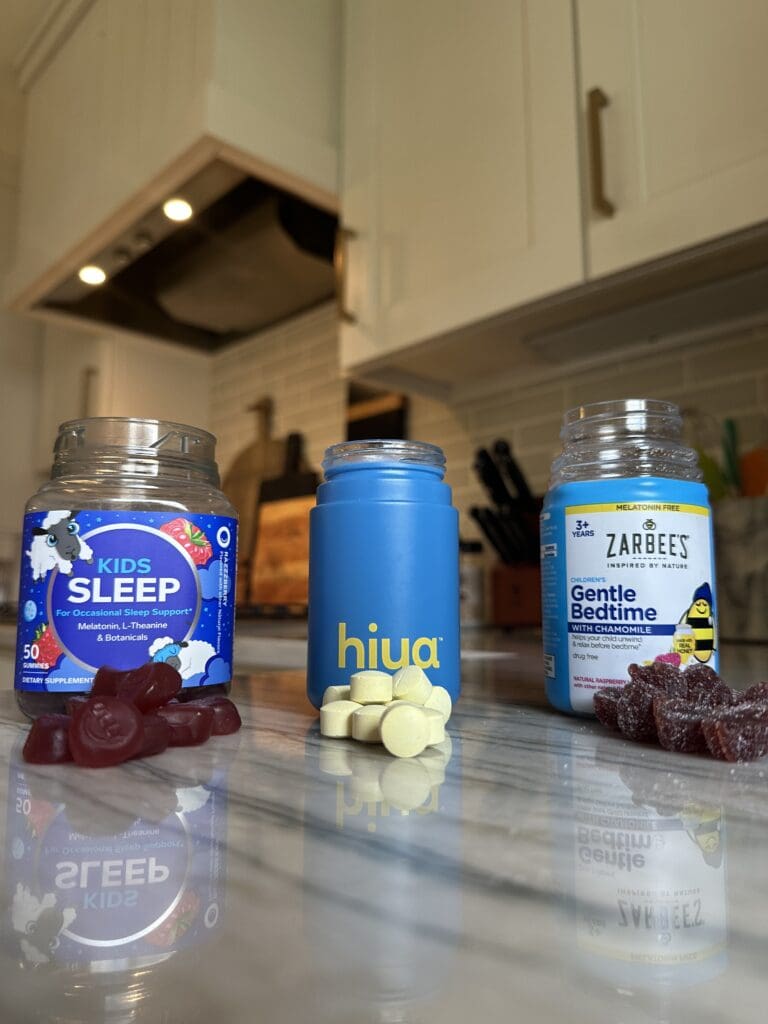
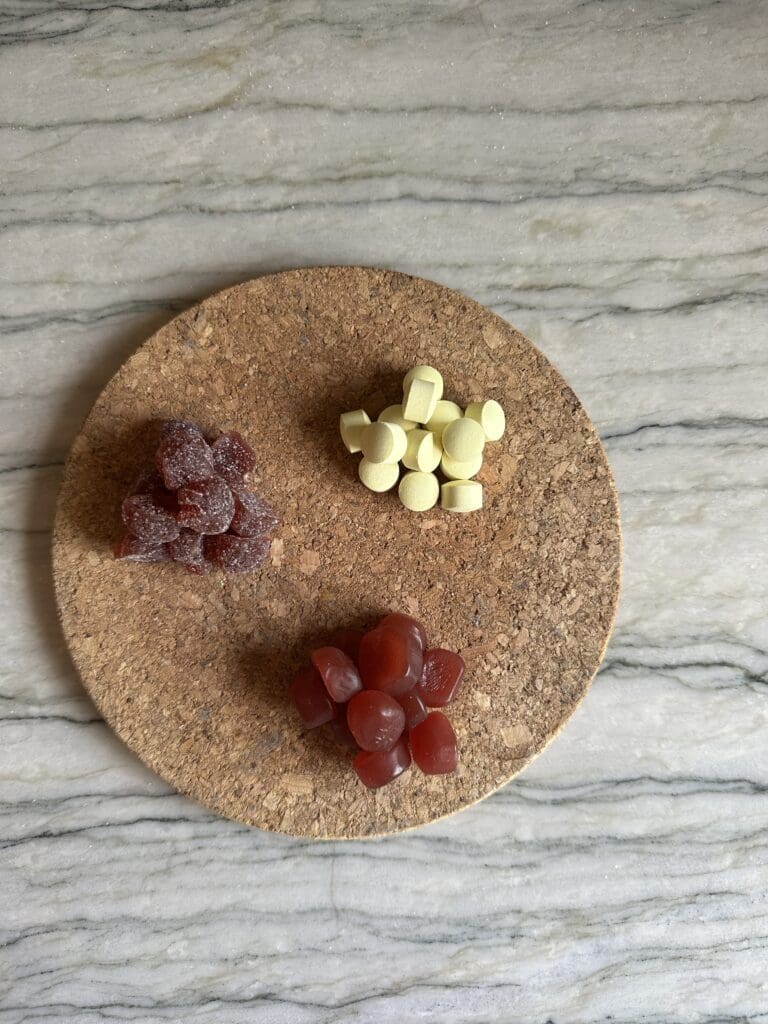
So I looked at what was on the market to see how different brands approach kids’ nighttime support.Here’s the quick comparison of the most popular bedtime products for kids:
Side-by-Side Comparison
| Hiya Bedtime Essentials | Zarbees Gentle Bedtime | Olly Kids Sleep | |
| Contains Melatonin? | ✅ No | ✅ No | ❌ Yes |
| Sugar? | ✅ Zero | ❌ Yes (honey, sucrose, glucose syrup) | ❌ Yes (glucose) |
| Active Ingredients | Magnesium, L-Theanine, GABA, B6, Calcium, Chamomile | Chamomile only | Melatonin, L-theanine, botanicals |
| Third-Party Tested? | ✅ Every batch | ❓ Not stated | ❓ Not stated |
| How It Works | Multi-pathway support for natural processes | Single herb | External hormone |
| Price per serving | ~$1.16 (with subscription) | ~$0.62 | ~$0.23 |
| Age Range | 2+ | 3+ | 4+ |
Now let me break down what I found with each:
Zarbees Gentle Bedtime Gummies
This brand is everywhere! It’s the first one that pops up on Amazon and it has just under 50k reviews.
It’s melatonin-free, which I appreciate. It uses chamomile as the active ingredient.
But when I looked at what’s inside, I didn’t like what I saw.
The ingredient list: “Honey, Sucrose, Glucose Syrup” as the first ingredients after chamomile.
The honey doesn’t bother me that much as it is natural (fructose). But the sucrose and glucose is a red flag. Boiled down, that’s a lot of sugar right before bed. Exactly what you’re trying to avoid.
And you’re only getting one active ingredient..
It’s not bad, but it’s pretty basic. If you’re looking for comprehensive nervous system support, this isn’t really delivering.
Olly Kids Sleep
This is the one I’d actively avoid.
It’s melatonin-based, and also includes L-theanine and some botanical extracts. But the main mechanism is still giving kids hormones instead of supporting your child’s body in producing its own.
It also has glucose in the ingredient list, so again, it’s a pass for me.
For all the reasons I talked about, I just can’t get behind giving kids melatonin as a first-line approach.
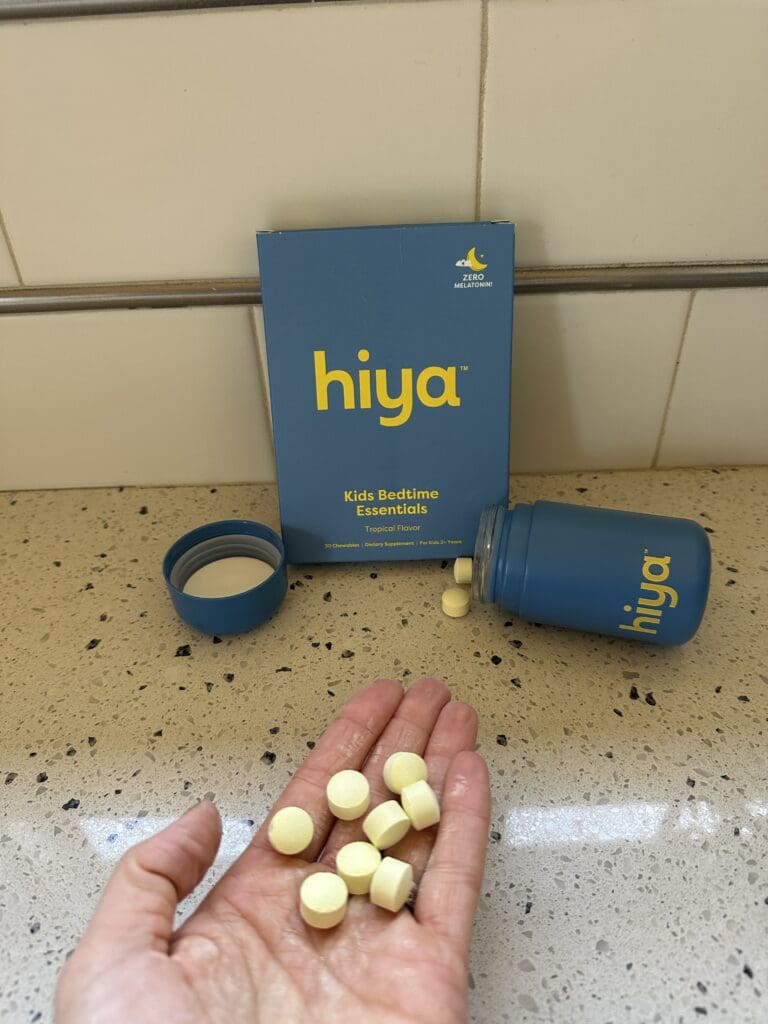
Hiya Bedtime Essentials
This is the one that made the most sense to me. Here’s why: it’s addressing multiple systems at once instead of taking a single-ingredient approach or giving external hormones.
The formula includes:
- Magnesium
- L-Theanine
- GABA
- Vitamin B6
- Calcium
- Chamomile
Instead of one herb in a sugar-coated gummy or an external hormone, this supports three different pathways:
Physical tension: Magnesium plus calcium may help relax muscles and nervous system.
Mental overstimulation: L-theanine plus GABA may support stress reduction and calm racing thoughts without sedation.
Natural hormone production: B6 plus magnesium may help support the body’s own melatonin production.
That comprehensive approach is what convinced me. It’s not just addressing one piece. It’s supporting multiple aspects of the wind-down process.
Get 50% off Hiya Bedtime Essentials with code HLMBedtime
The Sugar Thing Nobody’s Talking About
Here’s something that shocked me the first time I learned this: most kids’ sleep supplements contain added sugar.
And I’m not talking about a little bit. I’m talking multiple forms of sugar as primary ingredients.
Remember Halloween this year? The kids were WIRED that night and everyone was miserable the next day.
Not from the costumes or excitement. From the sugar.
Now imagine giving a mini sugar spike right before bed, wrapped in a “sleep support” gummy.
You’re literally working against yourself. It’s like fighting fire with gasoline…
The Cost Breakdown That Surprised Me
When I looked at the actual value, here’s what stood out:
Zarbees: $18 for 50 gummies = $0.62 per serving
- You get: chamomile plus sugar
- That’s it
Olly: $13.99 for 50 gummies = $0.27 per serving
- You get: melatonin plus some L-theanine plus sugar
Hiya: $17.50 first month (50% off), $35 ongoing for 30 chewables = $1.16 per serving
- You get: 6 active ingredients, zero sugar, third-party testing, refillable bottle
When you break it down, you’re paying ~$0.50 more for:
- Non-habit forming ingredients
- No sugar spikes before bed
- Nervous system support
- Actual quality control
That’s less than a quarter more per day for peace of mind about what you’re putting in your kid’s body.
Get 50% off Hiya Bedtime Essentials with code HLMBedtime
Why I’m Comfortable Recommending Hiya Bedtime Essentials
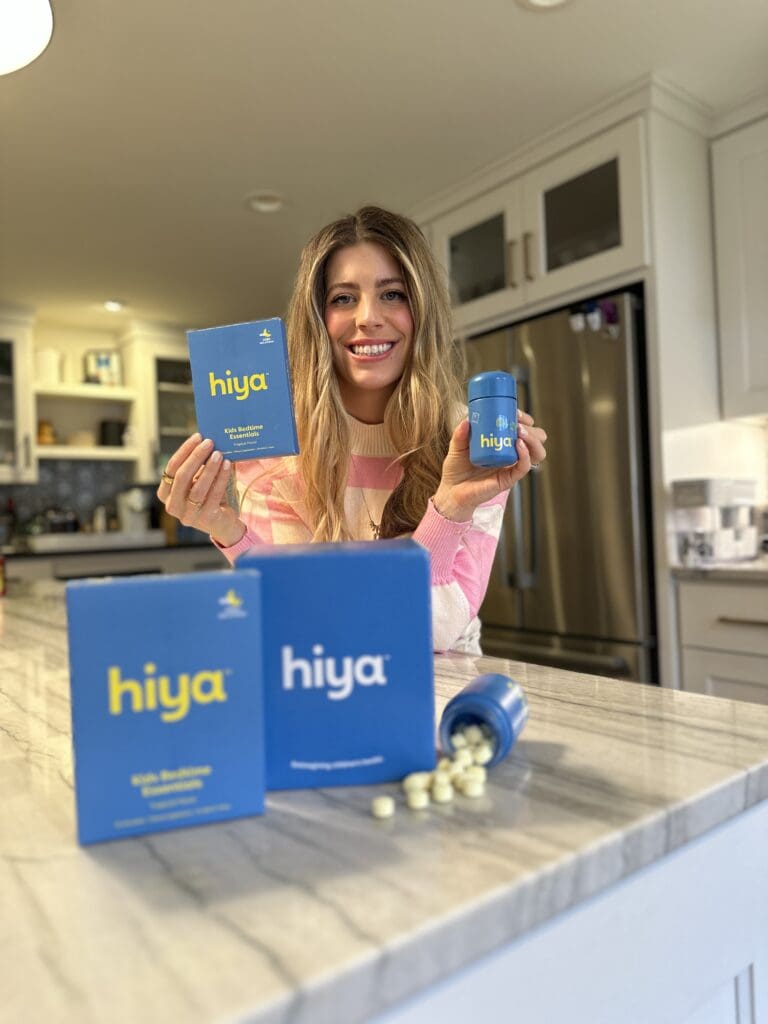

Look, E isn’t quite old enough for any of this yet.
But I’m writing this at 7am after we were up twice last night. His usual 3-4 hour naps have shrunk to 1-1.5 hours over the last 3 days.
I only wish I could support his sleep during this regression.
But for my friends whose kids are old enough and struggling? This is what I’m telling them to try.
Here’s why I feel good about it:
It’s Supporting, Not Doing the Work For Them
The biggest thing for me: it gives kids’ bodies the nutrients they need to do what they’re already designed to do.
Instead of giving external hormones that do the job for them, these ingredients support the natural processes. Muscle relaxation, neurotransmitter function, and the body’s own melatonin production.
Think of it like this: melatonin is like carrying your kid to bed when they could walk themselves. These other nutrients are like holding their hand while they walk.
The Three Things That Matter Most to Me
No melatonin. For all the reasons I’ve outlined. The hormone concerns, the lack of long-term data, the unregulated dosing. I wanted something that doesn’t come with concerns about endocrine disruption.
No sugar. The last thing any kid needs before bed is a sugar spike.
Zero sugar means you’re not working against yourself. What’s that saying? “The cure is worse than the disease”? Feels fitting when there’s added sugar in kids’ supplements before bed.
Third-party tested. Every single batch is tested in FDA-registered labs for heavy metals, microbials, and compliance with safety standards.
Given how wild (*ahem* and unregulated) the supplement industry is, this isn’t optional for me. It’s mandatory.
Those three things alone put Hiya in a different category from what else is out there.
It’s Designed FOR Kids
This isn’t an adult formula scaled down. It’s specifically formulated for kids’ developing bodies.
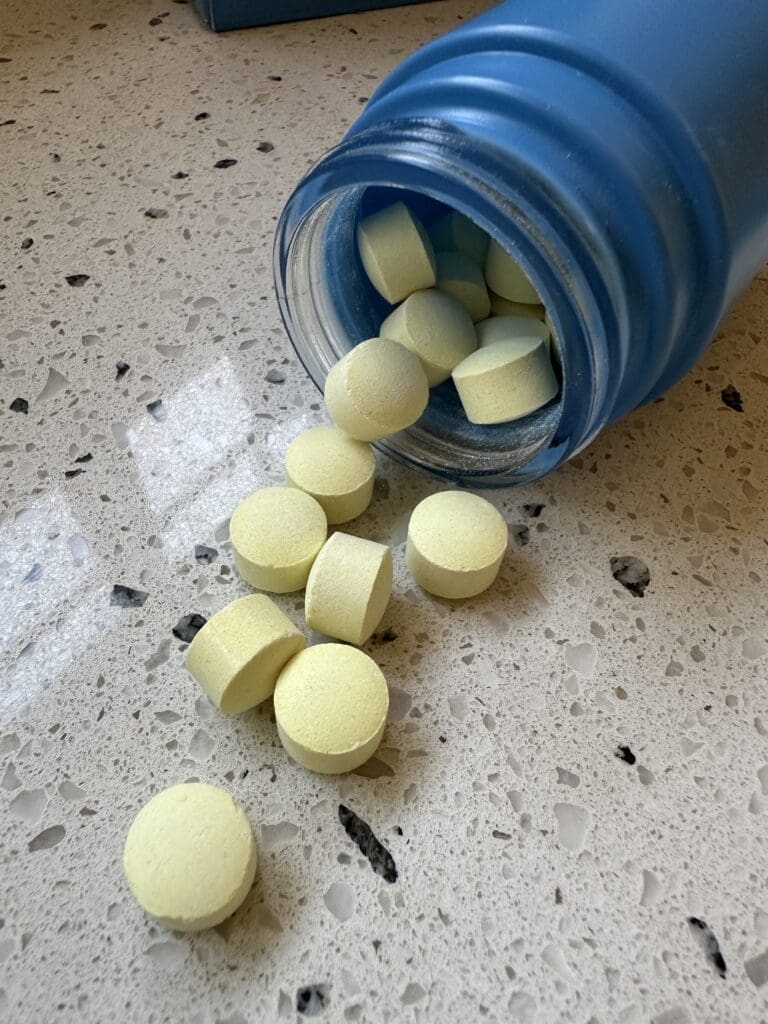
The manufacturing facilities are FDA-registered and GMP-certified. It comes with a refillable glass bottle (sustainability win) and stickers to decorate.
I gave a few to some of my friends’ kids to try out. Based on their feedback, their kids actually take it willingly. Which any parent that’s battled picky eaters, you get it.
The best product in the world won’t work if your kid refuses it.
Plus, Hiya’s customer service has been great and responsive, so the risk is minimized.
Try Hiya risk-free with code HLMBedtime for 50% off
The Bottom Line
Is this supplement for every kid? No.
If your child sleeps great naturally, you probably don’t need it. If behavioral and environmental changes are working, stick with those.
But if you’re dealing with kids who just can’t seem to downregulate at bedtime despite your best efforts? If they’re navigating the overstimulation of modern childhood and struggling to wind down both physically and mentally?
Then supporting their nervous system with the right nutrients makes sense.
This isn’t about creating dependency or replacing good sleep hygiene.
It’s about giving kids’ bodies the support they need to do what they’re designed to do in a world that’s constantly working against it.
When E is old enough, this is the only bedtime product I’ll choose after doing this level of extensive research.
Until then, I’m bookmarking it for all the friends texting me at 9pm like “my kid is STILL AWAKE and I’m losing my mind.”
Because sometimes, the answer isn’t just longer blue light blockers or more outside play (although, I will always promote more unsupervised outside play!).
Sometimes it’s acknowledging that their little nervous systems need actual, natural support to handle everything modern society is asking of them.
Get 50% off Hiya Bedtime Essentials with code HLMBedtime | Read more about the formula here.


View comments
+ Leave a comment